
What You Need To Know About Mixed Incontinence In Women
Quick Summary Mixed incontinence combines symptoms of stress incontinence and urge incontinence, making it one...
Read MorePain during menstruation is often dismissed as routine, yet conditions like adenomyosis vs endometriosis reveal a deeper medical reality. These two disorders both involve the uterine lining, but they affect the body in very different ways.
Understanding adenomyosis vs endometriosis helps identify the source of persistent pelvic pain, heavy periods, and fertility concerns.
When symptoms overlap, confusion is common, which can delay diagnosis. A clear understanding of how each condition develops and behaves allows for more accurate evaluation and more effective treatment decisions.
The uterus contains a specialized tissue called the endometrium. This lining thickens during each menstrual cycle in preparation for pregnancy. If pregnancy does not occur, the lining sheds and leaves the body through menstrual bleeding.
Both adenomyosis and endometriosis involve this same tissue, yet the location of growth changes everything. When endometrial tissue appears where it does not belong, it still responds to hormonal signals. This leads to inflammation, pain, and abnormal bleeding patterns that can disrupt daily life.
Adenomyosis occurs when endometrial tissue grows into the muscular wall of the uterus. Instead of staying within the inner lining, the tissue embeds itself deeper into the uterine structure. Over time, this causes the uterus to become enlarged and tender.
This misplaced tissue continues to thicken and shed with each cycle, but the blood becomes trapped within the muscle. As pressure builds, it can lead to intense cramps and prolonged bleeding. Many individuals describe a sense of heaviness or fullness in the lower abdomen.
Heavy periods are a defining feature of adenomyosis. Blood loss can become significant enough to cause fatigue or anemia. Pain may extend beyond menstruation and appear during daily activities or intimacy.
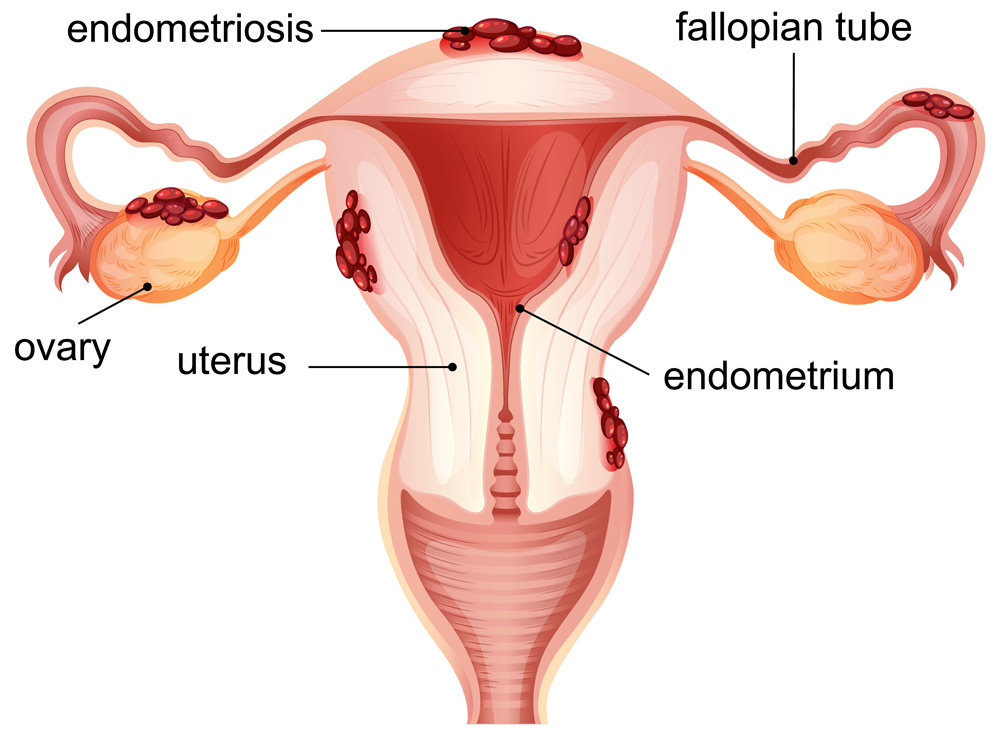
Endometriosis develops when tissue similar to the uterine lining grows outside the uterus. These growths often appear on the ovaries, fallopian tubes, or surrounding pelvic structures. In some cases, they extend to the bladder or bowel.
Unlike adenomyosis, the tissue has no direct pathway to exit the body. During each cycle, it thickens and breaks down, but remains trapped. This process leads to inflammation, scarring, and adhesions between organs.
Pain linked to endometriosis often feels sharp or radiates through the pelvis, back, or legs. It may intensify around menstruation but can also persist throughout the month. Fertility challenges may arise when scar tissue interferes with reproductive organs.
The main difference between adenomyosis vs endometriosis lies in where the abnormal tissue grows.
In adenomyosis, the tissue remains within the uterus but moves into the muscular wall. The uterus becomes thicker and larger, which contributes to pressure and pain.
In endometriosis, the tissue spreads outside the uterus and attaches to nearby organs. This external growth creates inflammation in multiple areas, which can lead to widespread discomfort.
This distinction affects how each condition presents and how it is managed. While both cause pain and heavy periods, the pattern and location of symptoms often differ.
Many symptoms overlap, which makes it difficult to distinguish between the two conditions without medical evaluation.
Painful periods appear in both conditions. The intensity can increase over time and may not respond to standard pain relief methods. Heavy periods are also common, especially in adenomyosis, though they can occur in endometriosis as well.
Pain during intercourse, pelvic discomfort, and fatigue may appear in both conditions. Digestive issues, such as bloating or irregular bowel movements, are more often linked to endometriosis due to its spread beyond the uterus.
Because of these similarities, individuals may live with symptoms for years before receiving a clear diagnosis.
While overlap exists, certain patterns help differentiate adenomyosis vs endometriosis.
Adenomyosis often leads to a noticeably enlarged uterus. This can create pressure on nearby organs such as the bladder or rectum. The pain may feel deep and constant, especially during menstruation.
Endometriosis tends to produce more localized or radiating pain. It may affect the lower abdomen, back, or even the legs. Pain during bowel movements or urination may occur if lesions affect those areas.
Fertility concerns are more commonly associated with endometriosis due to scarring and structural changes. Adenomyosis may also impact fertility, but it is less directly linked.
Endometriosis is often classified into stages based on the extent of tissue growth and scarring. The four stages of endometriosis range from minimal to severe.
Early stages involve small implants with little scarring. As the condition progresses, lesions deepen and adhesions form between organs. Advanced stages may involve large cysts on the ovaries and significant structural changes.
These stages do not always correlate with pain levels. Some individuals with early-stage disease experience severe symptoms, while others with advanced stages may have less discomfort.
Treatment for adenomyosis focuses on managing symptoms and reducing bleeding. Hormonal therapies may help regulate the menstrual cycle and decrease pain.
Non-surgical options may include medications that target inflammation or reduce hormone fluctuations. In some cases, minimally invasive procedures can address specific symptoms.
For individuals with severe symptoms that do not respond to other treatments, surgical options may be considered. Decisions depend on symptom severity, age, and future reproductive plans.
Endometriosis treatment often involves a combination of medication and surgical intervention. Hormonal therapies may slow the growth of abnormal tissue and reduce pain.
Pain management strategies focus on improving daily function and reducing inflammation. When symptoms persist, laparoscopic surgery may remove visible lesions and scar tissue.
Long-term management may involve ongoing monitoring, as endometriosis can recur even after treatment. Each treatment plan is tailored to the individual’s symptoms and goals.
At The Women’s Center, we listen closely to your symptoms and evaluate patterns that may point to adenomyosis or endometriosis. We guide you through each stage of diagnosis and help you understand your options with clarity.
If pelvic pain or heavy periods are affecting your life, do not wait. Schedule a consultation with us today and take a confident step toward answers, relief, and a care plan designed around you.
Quick Summary Mixed incontinence combines symptoms of stress incontinence and urge incontinence, making it one...
Read More
Quick Summary A mammogram can be performed during pregnancy when there is a medical reason...
Read More
Quick Summary Urinary incontinence can develop from several factors, including pregnancy, childbirth, menopause, weak pelvic...
Read More