

What You Need To Know About Mixed Incontinence In Women
Quick Summary Mixed incontinence combines symptoms of stress incontinence and urge incontinence, making it one...
Read MoreBreast tissue contains a complex network of ducts, lobules, and connective structures, which explains why the types of breast cancer vary widely in behavior and progression. Some forms remain localized for long periods, while others spread more quickly and require immediate attention.

Understanding how these cancers develop, how they are classified, and how they appear during screening can help patients recognize early signs, seek timely care, and better understand their diagnosis when discussing it with a healthcare provider.
Breast cancer begins when cells in the breast grow in an uncontrolled way. These abnormal cells may start in different parts of the breast, most commonly in the ducts that carry milk or the lobules that produce it. Over time, these cells can form a tumor and may invade nearby tissue.
The classification of breast cancer depends largely on where the cancer begins and how far it has spread. This distinction helps doctors determine how the disease may behave and what kind of treatment may be appropriate. While some cancers remain confined to their place of origin, others can move into surrounding tissue or even spread to distant organs.
Because each case develops differently, early detection plays an important role in identifying abnormal changes before they progress further. This is why routine screenings and paying attention to physical changes remain a key part of breast health.
One of the most important ways to categorize the types of breast cancer is by determining if the cancer is in situ or invasive.
In situ breast cancer refers to abnormal cells that remain in their place of origin. These cells have not spread into surrounding breast tissue. The most common form in this category is ductal carcinoma in situ, often identified during routine screening. Although it is considered an early stage, it still requires timely medical attention to prevent progression.
Invasive breast cancer occurs when cancer cells break through the original structure and move into nearby tissue. Once invasive, cancer cells may travel to lymph nodes or other parts of the body. This category includes several subtypes, each with its own characteristics and treatment approach.
Recognizing this difference helps patients understand how advanced a diagnosis may be and what steps might follow.
Ductal carcinoma in situ, often abbreviated as DCIS, is considered the earliest form of breast cancer. It begins in the milk ducts and remains confined there without spreading into surrounding tissue.
DCIS is frequently detected during a routine mammogram, especially in patients undergoing regular screening. In some cases, it may not cause noticeable symptoms, which highlights the importance of scheduling imaging even when no changes are felt.
Although DCIS is non-invasive, it can develop into invasive cancer if left untreated. With early diagnosis and appropriate care, outcomes are generally favorable. This type often allows patients to explore a range of treatment options depending on individual health factors.
Invasive ductal carcinoma is the most common type among all types of breast cancer, accounting for the majority of diagnoses. It begins in the milk ducts and spreads into surrounding breast tissue.
Because of its ability to grow beyond its original location, IDC may eventually affect nearby lymph nodes and other parts of the body. Symptoms can include a lump in the breast, changes in breast shape, or skin changes.
Detection often occurs through a combination of physical examination and imaging studies. Treatment approaches vary depending on the stage at diagnosis, but early identification can significantly improve outcomes.
Invasive lobular carcinoma starts in the lobules, which are the glands responsible for milk production. It tends to grow in a more subtle pattern compared to other cancers, making it harder to detect during standard imaging.
Patients with ILC may not always feel a distinct lump. Instead, they might notice fullness, thickening, or subtle changes in breast texture. This is one reason why understanding your body and attending regular screenings is important.
Because ILC can spread in a diffuse pattern, additional imaging such as MRI may be used in some cases to better evaluate the extent of the disease.
Triple-negative breast cancer is a more aggressive form of invasive cancer. It lacks three common receptors: estrogen, progesterone, and HER2. These receptors are often used as targets in treatment, so their absence can make this type more challenging to treat.
This form of breast cancer tends to grow and spread more quickly than other types. It is more common in younger women and may require a combination of therapies, including chemotherapy and surgery.
Because treatment options differ from hormone-responsive cancers, accurate diagnosis plays a key role in guiding care decisions.
Inflammatory breast cancer is rare but develops rapidly. Instead of forming a distinct lump, it affects the skin and lymph vessels of the breast.
Common signs include redness, swelling, warmth, and a thickened or pitted appearance of the skin. These symptoms may resemble an infection, which can sometimes delay diagnosis if not evaluated carefully.
Due to its aggressive nature, prompt medical attention is necessary when these changes appear. Early recognition can lead to quicker diagnosis and treatment planning.
Metastatic breast cancer refers to cancer that has spread beyond the breast to other parts of the body, such as the bones, lungs, liver, or brain. It is also known as stage four breast cancer.
While it is not considered curable, treatment focuses on managing the disease and maintaining quality of life. Many patients live for years with ongoing therapy and monitoring.
Understanding this stage helps patients and families prepare for long-term care and treatment strategies.
Lobular carcinoma in situ is not considered cancer, but it is an important condition to monitor. It involves abnormal cells in the lobules that have not spread to surrounding tissue.
Although LCIS does not usually cause symptoms or form a lump, it indicates a higher risk of developing breast cancer in the future. Patients diagnosed with LCIS often follow a more frequent screening schedule and may discuss preventive strategies with their healthcare provider.
Each type of breast cancer responds differently to treatment. Some cancers grow slowly and respond well to hormone therapy, while others require more intensive approaches such as chemotherapy or targeted therapy.
The presence or absence of certain receptors on cancer cells plays a major role in determining treatment options. Doctors use this information to create a personalized plan that considers the type, stage, and overall health of the patient.
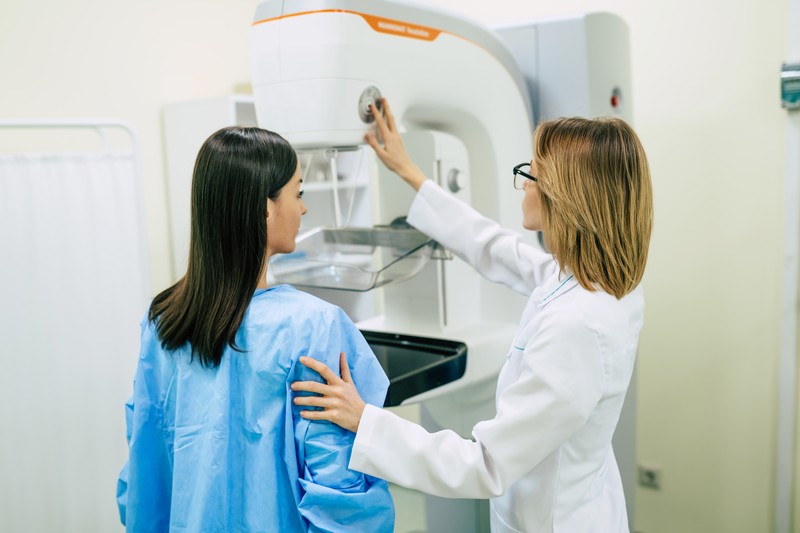
Regular screening plays a major role in identifying breast cancer before symptoms appear. Mammograms remain one of the most effective ways to check for breast cancer, especially in its early stages.
In some cases, imaging may reveal findings such as breast asymmetry on mammograms or changes related to dense breast tissue. These findings do not always indicate cancer, but they may require additional evaluation to rule out underlying concerns.
Patients with dense breast tissue may benefit from supplemental imaging, as dense tissue can make abnormalities harder to detect on standard mammograms.
At The Women’s Center, we focus on early detection, accurate diagnosis, and personalized care for every stage of breast health. From advanced imaging to ongoing monitoring, our team works closely with you to interpret findings like dense breast tissue or breast asymmetry and guide next steps.
If you have concerns or need to check for breast cancer, we are here to help you move forward with clarity and confidence.

Quick Summary Mixed incontinence combines symptoms of stress incontinence and urge incontinence, making it one...
Read More
Quick Summary A mammogram can be performed during pregnancy when there is a medical reason...
Read More
Quick Summary Urinary incontinence can develop from several factors, including pregnancy, childbirth, menopause, weak pelvic...
Read More